
Meeting intelligence, with evidence
Meeting Transcript Analysis Examples See what the conversation established.
➤ Your transcripts already captured the conversations. MeetMeaning works alongside to separate decisions, actions, conditions, risks and unresolved questions — then lets you trace every important claim back to the turn that supports it.
The experience, made simple
From conversation to a defensible next move.
MeetMeaning turns transcripts into clear, navigable records. It gives you the practical view first, while preserving the detailed context behind it.
Bring the conversation
Add one transcript for a meeting read, or two to compare the state of a discussion over time.
Reveal what matters
Separate decisions, actions, owners, deadlines, conditions, risks and questions from surrounding talk.
See what changed
Identify progress, reversals, contradictions, new obligations and items that remain open.
Choose your depth
Use a quick summary, an operational brief, or a full decision-integrity view — according to the task at hand.
Verify the claim
Follow an important finding back to the relevant transcript turn rather than relying on a detached assertion.
A real output sequence
One issue. Five useful ways to work.
In these two short Fairmont access-exception sample meetings, a condition moves from unresolved, to verified and closed. Choose an intention below to see the relevant view — not an overwhelming wall of product screens.
Example inputsTwo source meetings, 22 and 29 October 2026. Names and scenario are provided sample material.
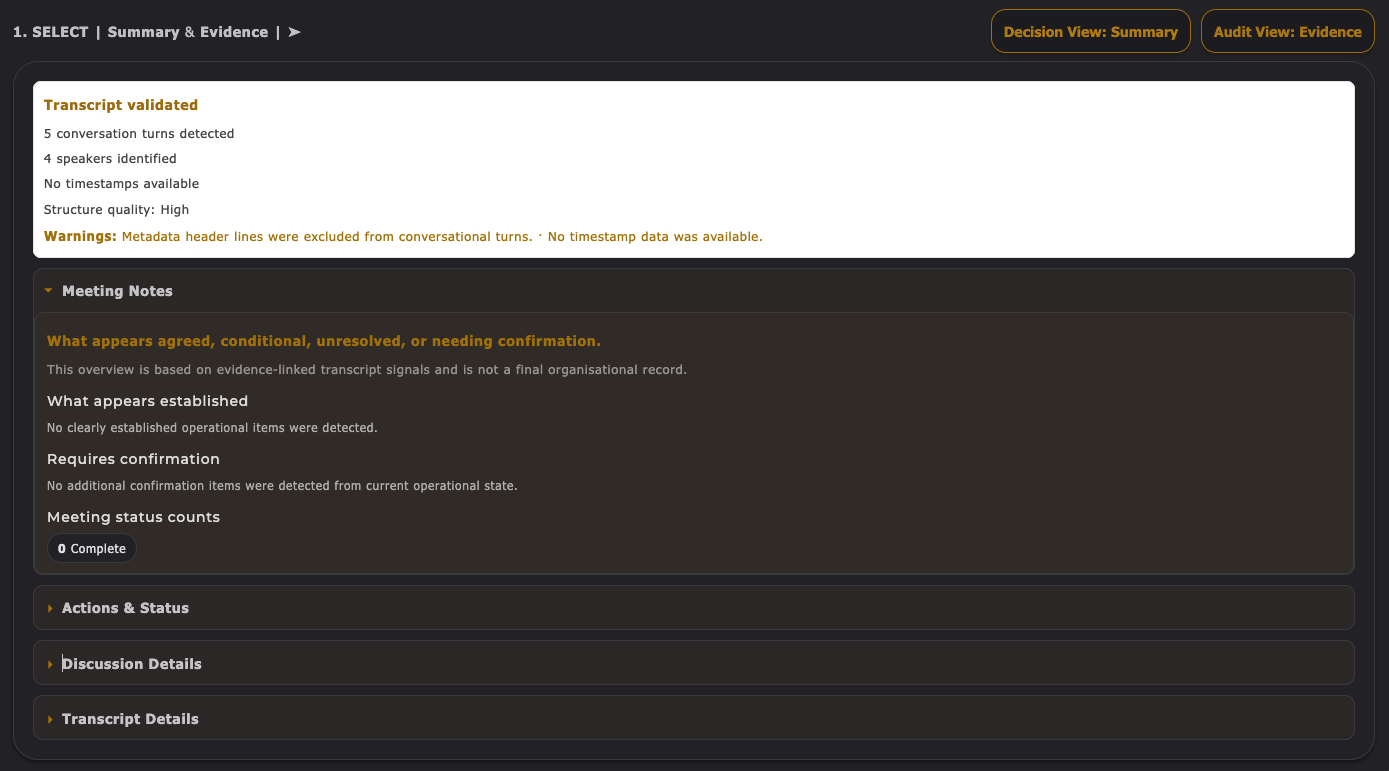
AI Summary
Get oriented without losing the nuance.
The first view distinguishes what appears established, what requires confirmation and what remains open. It is not merely a generic AI rewrite of the conversation.
- Clear status before detail
- Conditional language stays conditional
- Discussion and decision stay distinct
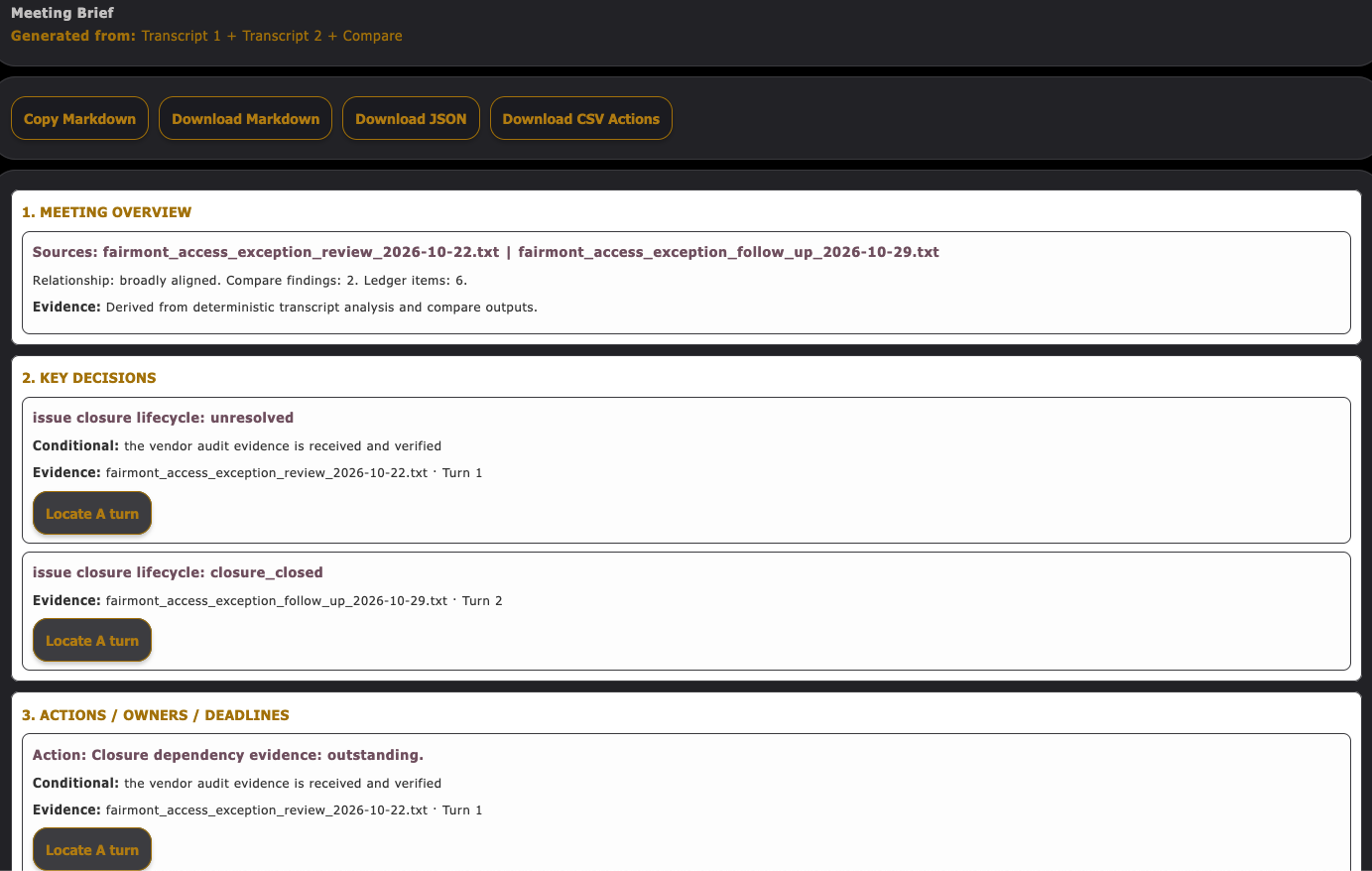
Meeting Brief
Turn a meeting into an accountable handover.
The Brief gathers decisions, actions, ownership, deadlines and dependencies in one working view — with an evidence route beside the items that matter.
- Decisions are separated from proposals
- Conditions and dependencies remain visible
- Exportable for the next meeting or update
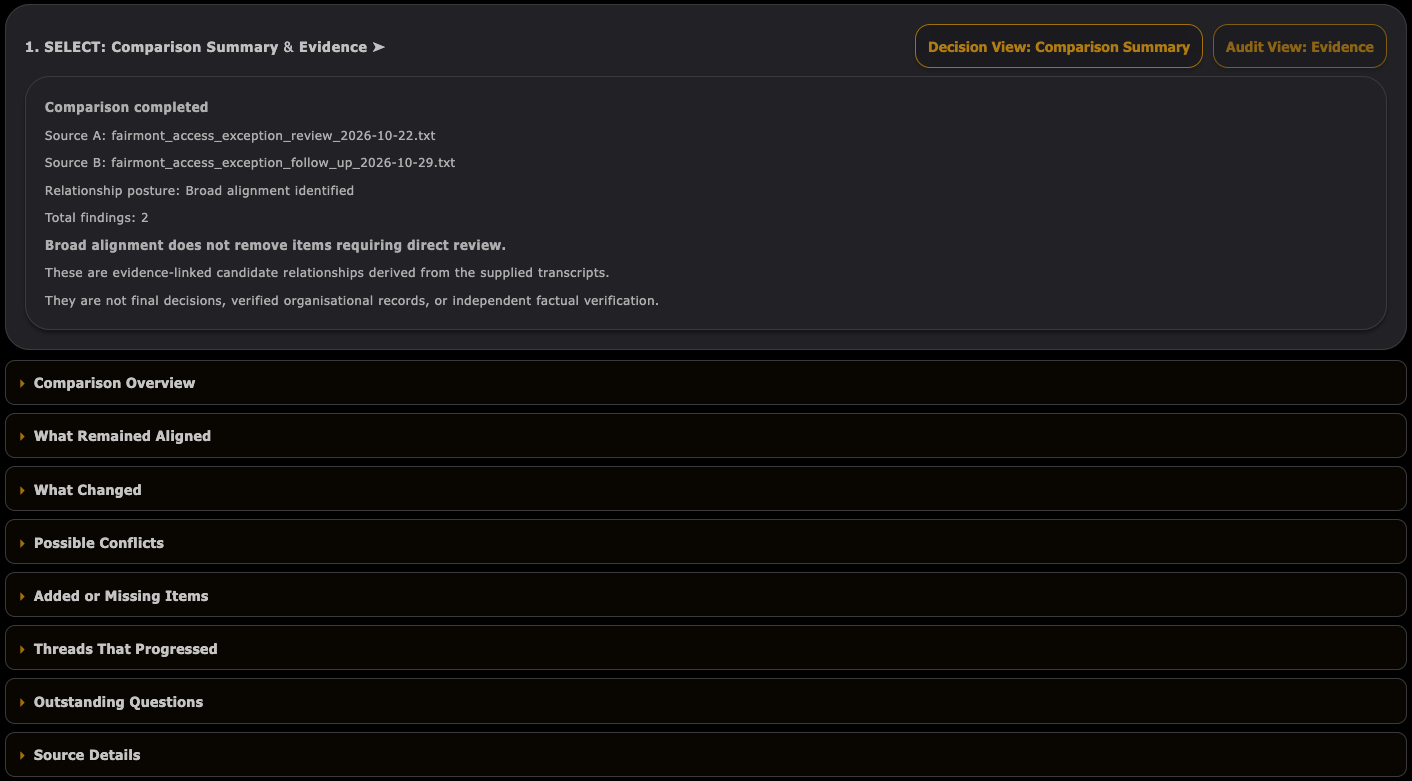
Transcript Compare
See the movement, not just the meetings.
The comparison view identifies the threads that progressed, diverged or remain unresolved. Here, receipt and verification of vendor evidence change the issue state from open to closed.
- What remained aligned
- What changed or conflicted
- What was added, missing or still open
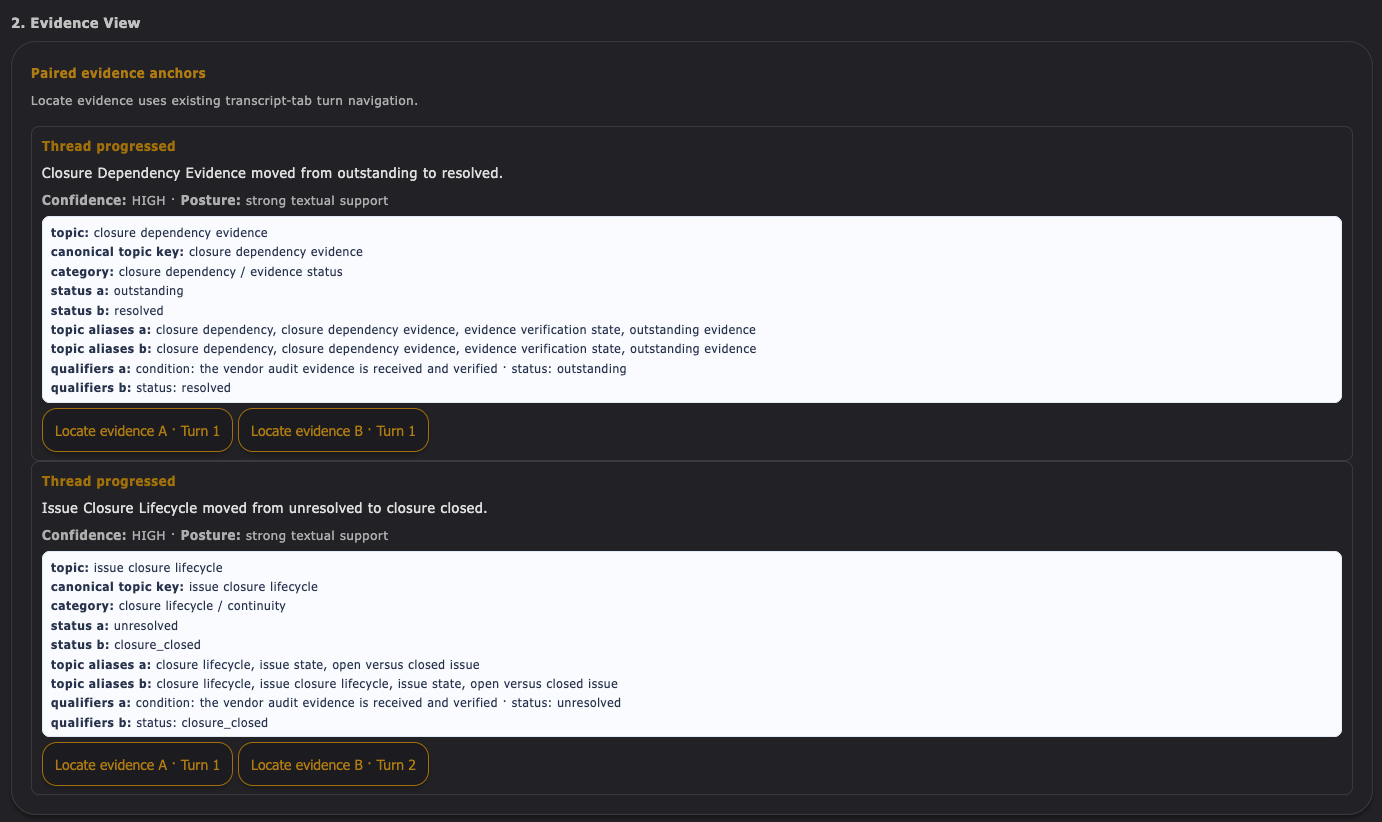
Locate Turn Evidence
Ask “where did that come from?” and get the answer.
MeetMeaning links a finding to its source turns, so the team can check wording, context and confidence before treating the result as a working record.
- Evidence is paired across the compared meetings
- Important claims stay inspectable
- Confidence is grounded in the conversation
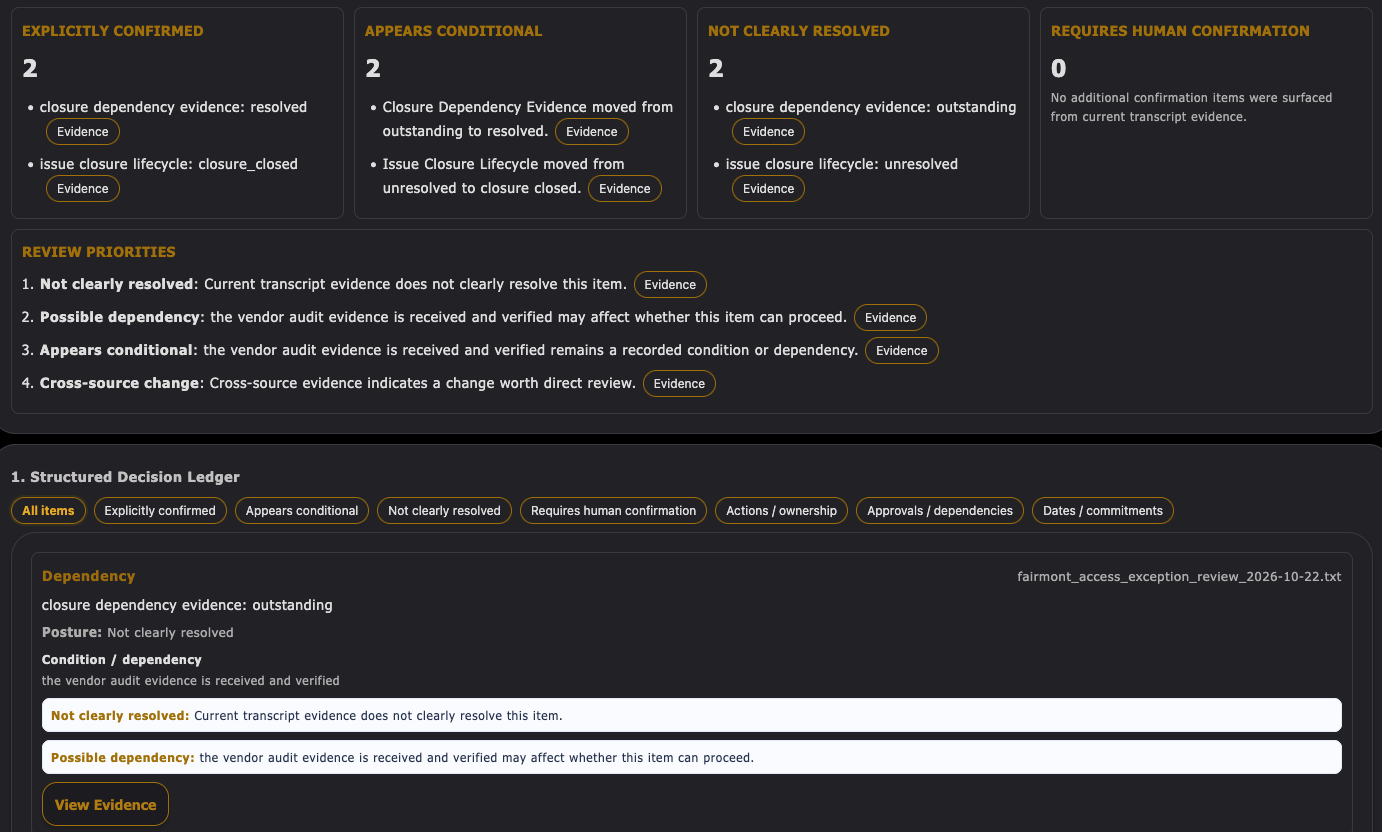
Decision Integrity
Keep the complete decision record available.
When a handover, review or sensitive decision needs more rigour, Decision Integrity groups the record by what is confirmed, conditional, unresolved or requires human confirmation.
- Review priorities rise to the top
- Decisions, actions and dependencies stay connected
- Human confirmation is explicit, not implied
Built to work alongside your stack
Keep your meeting tools. Add a layer of decision clarity.
MeetMeaning does not replace the recorder, calendar or transcription service your team already trusts. It uses the transcript they produce to make the working state of a conversation clearer, more useful and easier to check.
Record the meeting, identify speakers and create the transcript.
Read the internal structure: decision, action, condition, risk, question and change.
Begin the next update or meeting from a shared, evidence-linked record.
What MeetMeaning helps surface
More than a generic summary and more useful than transcripts alone.
- Confirmed decisions
- Conditional commitments
- Actions, owners and dates
- Dependencies and blockers
- Unresolved questions
- Changes between meetings
- Possible contradictions
- Evidence-linked source turns
- Human-confirmation points